Artificial intelligence is rapidly changing the way brands communicate with their audiences. From personalised website experiences and automated customer support to smarter advertising campaigns and social media management, AI in digital marketing is helping businesses create faster, more relevant and more personalised customer interactions.
For businesses competing in an increasingly digital marketplace, automation is no longer simply about reducing repetitive tasks. It is becoming a strategic tool for understanding customer behaviour, delivering relevant content and creating more connected digital experiences.
At Pimclick, a creative digital marketing and web design agency based in Bangkok, we see AI as part of a broader digital ecosystem. Since 2002, Pimclick has combined creativity, technology and digital expertise to help businesses build stronger online experiences across websites, advertising, social media and the wider digital spectrum.
What Is AI in Digital Marketing?
AI in digital marketing refers to the use of artificial intelligence technologies to analyse data, automate marketing activities, understand customer behaviour and support more personalised communication.
Modern AI tools can process large volumes of information and identify patterns that would be difficult to detect manually. This allows marketing teams to make more informed decisions while automating repetitive processes.
Depending on the business and its objectives, AI can support areas such as:
- Customer data analysis
- Content personalisation
- Chatbots and automated customer support
- Email marketing automation
- Social media management
- Advertising optimisation
- Lead qualification
- Customer journey analysis
- Predictive marketing
- Website search and recommendation systems
The objective is not simply to automate marketing. The real opportunity is to use automation to make digital communication more relevant and responsive.
How Automation Is Changing Customer Engagement
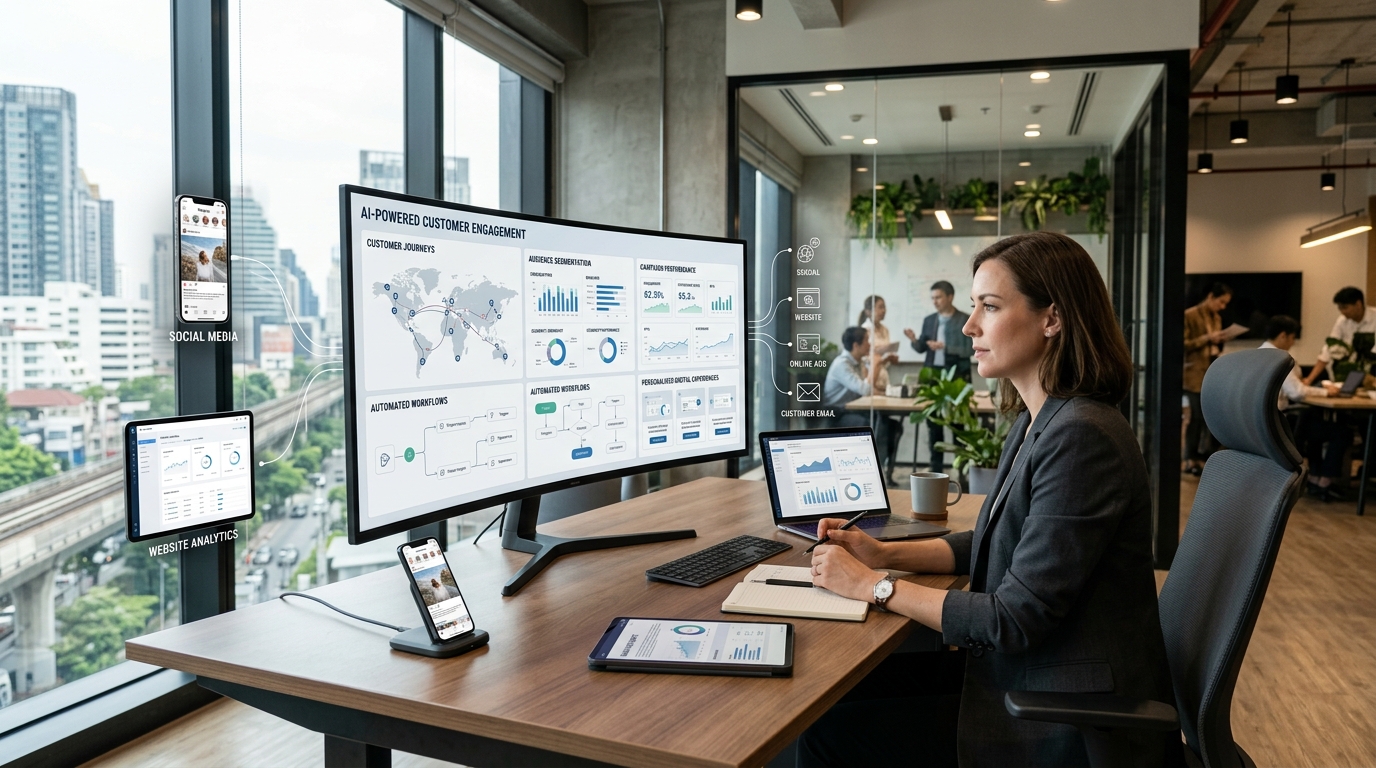
Customer expectations have changed significantly. People increasingly expect brands to provide useful information quickly, respond across multiple channels and deliver experiences that feel relevant to their needs.
AI-powered automation can help businesses respond to these expectations by connecting data, content and communication more efficiently.
Personalised Customer Experiences
One of the most important applications of AI is personalisation. Instead of presenting exactly the same experience to every visitor, businesses can use customer data and behavioural signals to provide more relevant content.
For example, an e-commerce website can recommend products based on browsing behaviour, previous purchases or customer preferences. A service-based website can highlight relevant services depending on the visitor's interests or previous interactions.
When used responsibly, this type of personalisation can make digital experiences more useful without making the customer journey feel complicated.
AI-Powered Chatbots and Customer Support
Customers often want answers immediately. AI-powered chatbots can provide automated assistance around the clock, helping visitors find information, understand services, answer frequently asked questions and identify the next step in their customer journey.
For businesses receiving enquiries outside normal working hours, automated conversations can also help capture potential leads before a member of the team becomes available.
However, automation should not replace human interaction in every situation. Complex questions, sensitive customer issues and high-value enquiries may still require a real person. The most effective approach is often a combination of automated assistance and human expertise.
Smarter Social Media Engagement
Social media generates a constant flow of comments, messages, reactions and customer questions. AI can help marketing teams analyse this activity and identify common topics, customer interests and emerging conversations.
Automation can also support content scheduling, audience segmentation, social listening and response workflows. This allows teams to spend less time on repetitive administrative tasks and more time developing creative campaigns and meaningful communication.
For an independent advertising and social media agency, AI can therefore become an additional layer of intelligence supporting creative strategy rather than replacing creativity itself.
More Relevant Email Marketing
Email marketing is another area where automation can significantly improve customer engagement. Instead of sending identical messages to an entire database, businesses can create automated journeys based on customer actions and interests.
AI can help identify audience segments, recommend suitable content, analyse engagement patterns and optimise campaign timing.
For example, a customer who downloads a guide may receive a relevant follow-up message, while an existing customer may receive information related to their previous interaction with the brand.
This creates a more connected communication journey and reduces the reliance on generic mass messaging.
AI and Advertising Optimisation

Digital advertising produces large amounts of performance data. AI can help marketers analyse this information and identify patterns across audiences, creatives, placements and campaigns.
Automation can support tasks such as audience segmentation, budget allocation, campaign testing and performance analysis. This can help marketing teams react more efficiently as campaign conditions change.
Creative strategy remains important, however. AI can help identify what is happening in a campaign, but marketers still need to understand the brand, audience, positioning and cultural context behind the data.
AI Is Transforming the Customer Journey
The impact of AI goes beyond individual marketing channels. One of its biggest opportunities is connecting different stages of the customer journey.
A typical digital customer journey might begin with an advertisement, continue through a website visit, develop through social media or email communication and eventually result in an enquiry or purchase.
AI and automation can help connect these interactions.
For example:
- A customer discovers a brand through a targeted digital advertisement.
- The customer visits a website and receives relevant content based on their interests.
- An AI chatbot answers an initial question.
- The customer submits an enquiry through an automated form.
- The lead is categorised and transferred to the appropriate sales team.
- Follow-up communication is triggered based on the customer's interaction.
Rather than treating advertising, website design, social media and customer communication as separate activities, businesses can use automation to create a more connected digital ecosystem.
The Role of AI in Web Design and Digital Experiences
AI is also influencing the way websites are designed and managed. Beyond generating content, AI can support search, navigation, recommendations, customer assistance and the analysis of user behaviour.
A successful website should still begin with clear UX principles, strong visual communication, fast performance and a well-structured customer journey. AI can then enhance these foundations by helping businesses understand how visitors interact with the site and where improvements may be needed.
For a web design agency, this means thinking beyond how a website looks. The modern digital experience increasingly needs to consider how information is presented, how users find answers and how technology can support their journey from discovery to conversion.
Automation Does Not Mean Less Creativity
One common concern about AI in marketing is that automation could make brand communication feel generic. In reality, the result depends largely on how the technology is used.
Automation is particularly effective for repetitive and data-heavy processes. Creativity remains essential for defining a brand's identity, developing campaign concepts, creating emotional connections and communicating ideas in memorable ways.
The strongest approach combines both.
AI can handle more of the repetitive work. Creative teams can focus more of their time on strategy, storytelling and ideas.
This combination can create marketing that is both efficient and distinctive.
Why Human Oversight Still Matters
AI systems can process information quickly, but they do not automatically understand every cultural, emotional or business context.
Human oversight remains important when developing customer-facing communication. Marketing teams should review AI-generated content, verify important information and ensure that automated experiences reflect the brand's tone and values.
Businesses should also consider privacy, transparency and responsible data use when implementing AI-powered marketing systems. Customers need to understand how their information is being used, particularly when personalisation and automated decision-making are involved.
AI, Data and the Future of Customer Engagement
As AI technology develops, customer engagement is likely to become increasingly predictive and personalised. Marketing platforms will continue to connect data from websites, advertising, CRM systems, social media and other digital touchpoints.
This could allow brands to anticipate customer needs more effectively and deliver relevant information at different stages of the customer journey.
However, more technology does not automatically create better marketing. The quality of the underlying strategy, data, creative work and customer experience remains fundamental.
How Businesses Can Prepare for AI-Powered Marketing

Businesses looking to introduce AI into their digital marketing strategy can start with practical steps rather than attempting to automate everything at once.
- Identify repetitive tasks: Look for marketing activities that consume significant time but follow predictable processes.
- Understand customer data: Review what information is available and how it can be used responsibly.
- Improve the digital foundation: Ensure that websites, analytics, CRM systems and marketing platforms can work together effectively.
- Start with specific use cases: Test AI in areas such as customer support, content workflows, reporting or personalisation.
- Measure the results: Evaluate engagement, conversion rates, customer satisfaction and operational efficiency.
- Keep humans involved: Use human expertise for strategy, creative direction, quality control and complex customer interactions.
AI and the Next Generation of Digital Marketing
AI is changing digital marketing from a collection of individual campaigns into a more connected and automated customer experience. From the first advertisement to the website visit, social media interaction and final conversion, businesses now have more opportunities to use technology to understand and respond to customer needs.
For brands, the challenge is not simply deciding whether to use AI. It is understanding where automation can create genuine value while maintaining the creativity, authenticity and human connection that make a brand memorable.
At Pimclick, we combine creative thinking, digital marketing expertise and web design experience to help businesses navigate an evolving digital landscape. Based in Bangkok and working across the wider digital spectrum since 2002, Pimclick brings together creativity, technology and strategic thinking to create digital experiences designed around real business and customer needs.
Conclusion
AI in digital marketing is transforming customer engagement by making communication faster, more personalised and increasingly automated. From chatbots and social media to advertising, email marketing and intelligent websites, AI is becoming an important part of the modern digital toolkit.
The most effective future is unlikely to be purely automated. Instead, it will combine the efficiency of AI with human creativity, strategic thinking and genuine understanding of customers.
For businesses ready to adapt, this combination offers an opportunity to build digital experiences that are not only more efficient, but also more relevant and engaging.