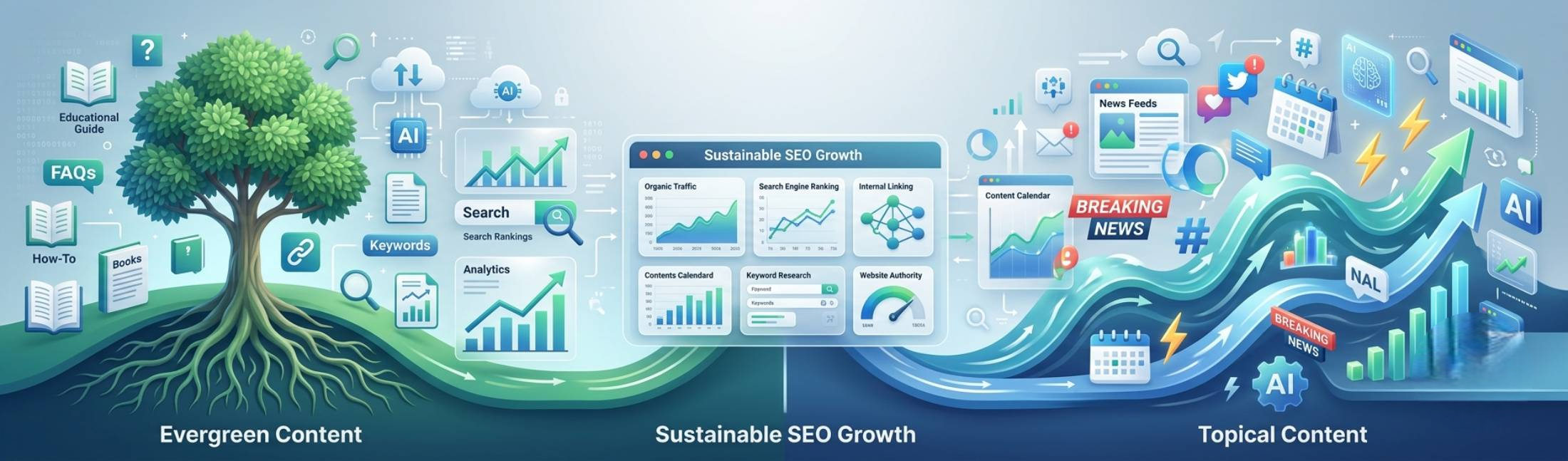
SEO is not just about publishing content—it’s about sustaining visibility over time. Some articles deliver traffic for years, while others generate quick bursts of attention before fading away. To build a powerful and predictable SEO engine, brands must strategically plan content lifecycles by balancing two types of content: evergreen and topical.
Knowing when to use each, how to optimize them, and how they work together is essential for long-term search performance. This blog explores the differences, benefits, and lifecycle planning strategies that help businesses create content portfolios that grow traffic consistently.
Understanding Evergreen Content
Evergreen content is search-optimized material that remains relevant for a long period—sometimes years. It covers topics that maintain consistent interest and stable search volume.
Characteristics of Evergreen Content
- Timeless relevance
- High long-term traffic potential
- Lower maintenance compared to topical content
- Often answers foundational or recurring questions
Examples
- “How to Choose the Right CRM System”
- “What Is Semantic SEO?”
- “Beginner’s Guide to Thai Massage Techniques”
Benefits for SEO
Evergreen content helps websites build stable traffic, increase authority, and attract backlinks from other sites looking to reference reliable information. Because the search demand doesn’t disappear, evergreen pages often become cornerstone assets within a content strategy.
Understanding Topical Content
Topical content focuses on trends, timely news, events, or changes happening in the moment. It delivers quick spikes in visibility but usually has a shorter lifespan.
Characteristics of Topical Content
- Time-sensitive
- High short-term search volume
- Fast rise and decline in traffic
- Great for capturing social buzz
Examples
- “Google’s Latest Algorithm Update Explained”
- “2025 Digital Marketing Predictions”
- “New Wellness Trends Taking Over Bangkok”
Benefits for SEO
Topical pieces attract fast bursts of traffic and help brands stay relevant in ongoing industry conversations. They also increase brand visibility when audiences are actively searching for the newest information.
Why You Need Both Evergreen and Topical Content
Relying on only one type of content limits SEO growth.
- Evergreen content gives you stability and long-term organic traffic.
- Topical content boosts freshness signals, expands brand reach, and helps you capitalize on emerging search trends.
Together, they create a content ecosystem that supports both present and future visibility. Search engines favor websites that consistently publish relevant, up-to-date content while maintaining depth and authority on enduring topics.
Planning a Content Lifecycle for Long-Term SEO Success
An effective content lifecycle considers how each piece will perform over time, how often it should be updated, and how it fits into the overall content strategy.
1. Start with Evergreen Foundations
Build your content around core topics your audience cares about—your "pillar" themes. These foundational pages become the backbone of your SEO:
- Ultimate guides
- How-to tutorials
- Resource hubs
- Frequently asked questions
Evergreen pages should be optimized thoroughly, internally linked, and refreshed regularly.
2. Layer in Topical Content to Capture Momentum
Use topical content to:
- Address trends
- React to industry changes
- Capitalize on news
- Support time-sensitive launches
These pieces attract bursts of traffic that indirectly support evergreen posts through internal linking, shares, and increased website authority.
3. Build Internal Links Between the Two
A strategic internal linking system ensures that topical articles drive new readers toward evergreen content. This boosts authority and provides users with a deeper learning journey.
4. Establish an Update Schedule
Evergreen content should be updated every 6–12 months to maintain accuracy.
Topical content should be updated only when new information emerges—or archived when outdated.
Measuring Content Performance Over Time
Track performance at different stages of the content lifecycle.
Evergreen Metrics
- Organic traffic trends
- Ranking stability
- Backlink growth
- Engagement rates over time
These metrics show how well your foundational content holds value.
Topical Metrics
- Traffic spikes
- Social shares
- Impressions during peak periods
- Short-term engagement
These illustrate your ability to capture trends and stay relevant.
Refreshing Content to Extend Its Lifecycle

Refreshing is one of the most underrated SEO techniques. Updating older content can return it to peak performance and extend its relevance.
Ways to Refresh Evergreen Content
- Add updated statistics
- Expand explanations
- Improve visuals or examples
- Update headings to target new long-tail keywords
Ways to Refresh Topical Content
- Convert it into evergreen formats (e.g., “2025 trends” becomes “Annual Digital Marketing Trends”)
- Add new industry updates
- Combine multiple topical posts into a comprehensive guide
Refreshing keeps content aligned with current search intent, increasing longevity.
Conclusion: Smart Content Planning Drives Sustainable SEO
Balancing evergreen and topical content isn’t just an editorial decision—it’s a long-term SEO investment. Evergreen pieces create a foundation of reliable traffic and authority, while topical content boosts relevance and momentum. Together, they create a dynamic content lifecycle that supports consistent growth and visibility.