
SEO is changing faster than ever. Search engines are no longer matching pages to queries based solely on keywords. Instead, they’re interpreting meaning, relationships, and intent—a major evolution driven by semantic search.
Today, content must do more than include phrases users type into Google. It must be structured, contextual, and deeply aligned with how machines understand information. And when done right, semantic SEO creates a powerful advantage: your content becomes easier for search engines to interpret and more valuable for users to consume.
This blog explores how to write for both humans and machines using semantic search and structured content.
What Is Semantic Search—and Why It Matters
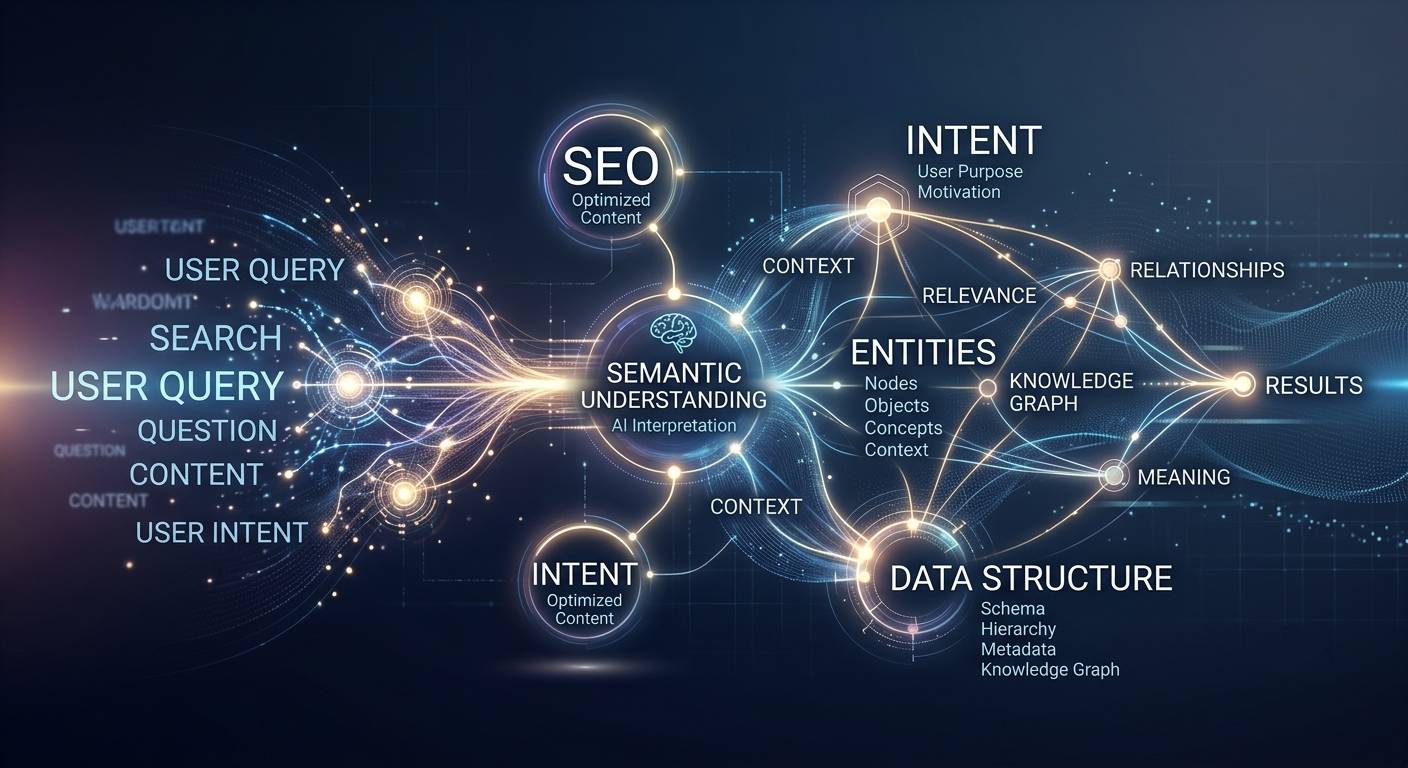
Semantic search focuses on understanding what a user actually means, not just the words they type. It interprets:
- Search intent (informational, transactional, navigational, etc.)
- User context (location, history, device)
- Entity relationships (people, places, concepts)
- Variations of language (synonyms, natural phrasing, long-tail queries)
Instead of relying on exact keywords, Google uses AI models, natural language understanding, and the Knowledge Graph to interpret the broader meaning of content.
Why This Matters for Writers
Keyword-stuffed paragraphs no longer perform. Search engines reward content that:
- Provides clear, connected ideas
- Uses natural language
- Answers complex questions
- Fits into the bigger web of information
Meaning—not repetition—drives modern visibility.
Writing with Search Intent at the Core
Every search query is driven by a purpose. Semantic SEO begins by identifying this purpose and writing content that satisfies it thoroughly.
Match Content Type to Intent
Examples:
- “How to optimize a website” → detailed guide, steps, visuals
- “Best SEO tools” → comparison table, pros/cons, structured list
- “SEO consultant near me” → local landing page with structured data
When your content directly aligns with intent, semantic signals strengthen automatically.
Answer Questions Completely
Semantic search favors content that answers broad and specific queries alike. Include:
- Definitions
- Examples
- Comparisons
- Use cases
- FAQs
The more complete the explanation, the more sites your page becomes relevant for—yielding higher visibility.
Structured Content: The Architecture Behind Meaning
Semantic search thrives on organization. When content is structured, machines can understand its context more easily.
Use Logical Headings (H1, H2, H3)
Headings break content into concepts and subtopics. Search engines read this hierarchy to understand relationships between ideas.
Use Lists, Tables, and Bullet Points
These formats clarify information and help Google extract featured snippets.
Create Consistent Content Patterns
For example:
- Start with definitions
- Follow with examples
- End with practical use cases
Consistent structure increases machine readability.
Schema Markup—Speaking the Language of Search Engines
Schema markup is like giving Google a translator. It converts your content into structured data that search engines can easily categorize and display in rich results.
Types of Schema Worth Adding
- Article / BlogPosting
- FAQ
- HowTo
- Product
- LocalBusiness
- Review
- Event
Schema doesn’t replace good writing—but it strengthens machine understanding, improving relevance and click-through rates.
Benefits of Schema
- Enhanced search appearance (rich snippets)
- Better alignment with intent
- Higher topical authority
- More certainty about what your content means
In the age of semantic SEO, schema shifts from “optional” to “essential.”
Writing for Entities, Not Just Keywords
Semantic search revolves around entities—people, places, concepts, and things that Google recognizes. When content connects entities in logical ways, it becomes more trustworthy.
Example: Writing About “SEO Strategy”
Connect it to related entities such as:
- Search intent
- Content clusters
- Keyword research
- Semantic search
- Technical optimization
These entity links tell Google that your content fits within a broader knowledge framework, strengthening topical authority.
Build Internal Links That Mirror Meaning
Internal links should connect related concepts, not just random pages. This forms a semantic map through your website.
Creating Topical Authority Through Semantic Clusters
Search engines reward depth. Instead of writing scattered blogs, create clusters of related topics that reinforce authority.
A Simple Cluster Structure
- Pillar Page: Broad high-level guide
- Cluster Articles: Deep dives into subtopics
- Interlinks: Connect them all logically
Clusters help Google see your brand as an expert with comprehensive knowledge—not just a website posting isolated articles.
Conclusion: A Future Built on Meaning
Semantic search is the future of SEO. As search engines become more intelligent, success depends on creating content that machines can interpret and humans can enjoy.
By combining structured content, entity-focused writing, schema markup, and intent-driven topics, you’re no longer just optimizing for keywords—you’re optimizing for understanding.