In today’s digital ecosystem, trust is no longer just important—it is the deciding factor.
Before users read a single sentence or interact with a single element, they’ve already formed a subconscious judgment about your brand. In 2026, that judgment happens almost instantly, often in less than a fraction of a second, shaped by increasing exposure to AI-generated content, deepfakes, and highly polished digital experiences.
This means users are more cautious than ever. They don’t just ask “Does this look good?”—they ask “Can I trust this?”
Design is no longer just visual. It is psychological infrastructure.
First Impressions in the Age of AI Saturation
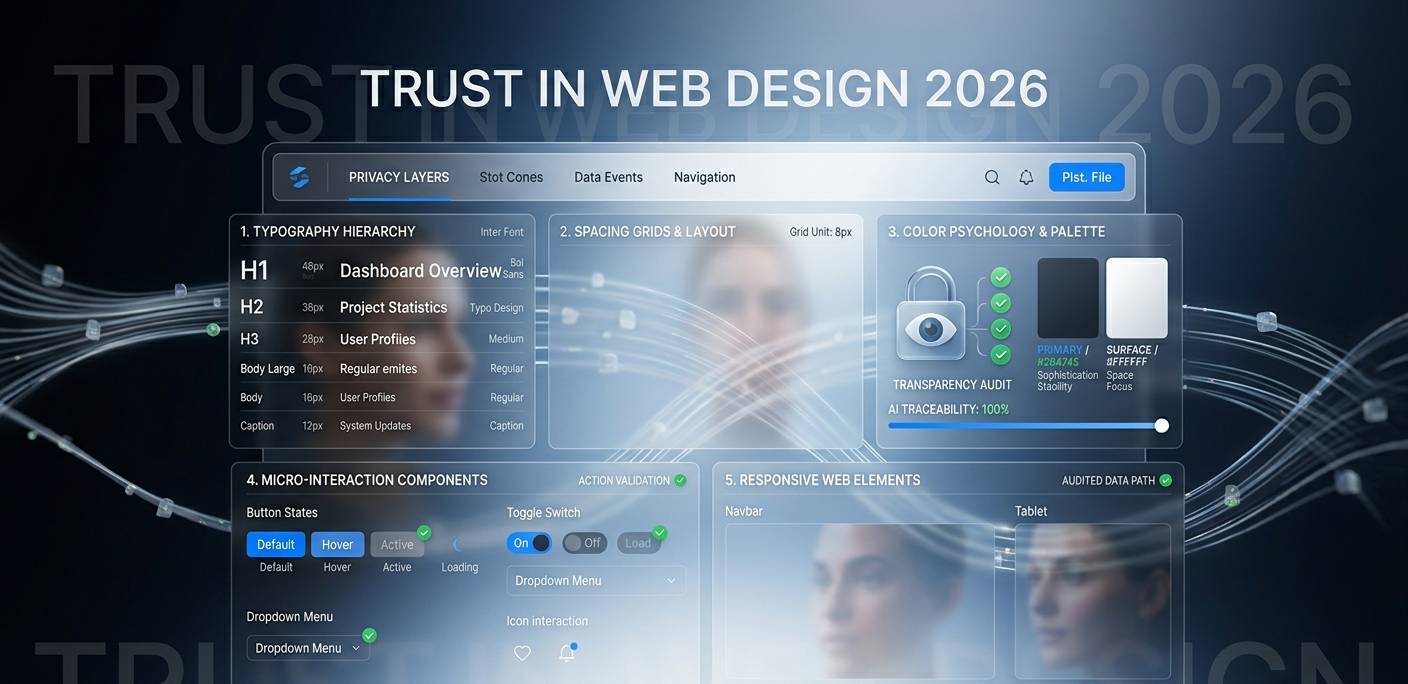
Human brains still rely on rapid visual processing—but in 2026, this instinct is sharpened by digital overload.
Users now encounter thousands of interfaces and AI-generated visuals daily, making them more selective and skeptical.
Strong first impressions are built through:
- Clean, intentional layouts that avoid “AI-generated clutter” signals
- Consistent visual hierarchy that feels human-designed, not automated
- High-quality, authentic imagery that avoids generic AI aesthetics
- Clear structure that reduces cognitive uncertainty
A poorly structured or overly “synthetic” design now triggers doubt faster than ever.
In short: users don’t just judge design—they assess authenticity.
The Trust Equation: Human Experience + Usability Intelligence
In 2026, credibility comes from a blend of human-centered design and intelligent functionality.
A strong digital product balances:
- Emotional design: feels human, relatable, and grounded
- Functional clarity: works seamlessly across devices and contexts
- Adaptive intelligence: personalization without feeling invasive
If a platform feels too automated, users distrust it.
If it feels too manual or outdated, users disengage.
Trust now lives in the balance between efficiency and humanity.
Color Psychology in a Hyper-Digital World
Color still shapes perception, but in 2026 it also signals brand maturity and digital ethics.
Common associations remain powerful:
- Blue: reliability, security, and institutional trust
- Green: balance, wellness, and sustainability credibility
- Black: premium positioning and controlled exclusivity
- White: transparency, clarity, and ethical simplicity
However, consistency is now more critical than ever.
Frequent color shifts across platforms can feel like fragmented identity or even manipulation.
Typography as a Signal of Digital Integrity
Typography has become a subtle trust indicator in an AI-heavy design landscape.
Users now associate inconsistent or overly decorative fonts with low credibility or automated generation.
Best practices in 2026 include:
- Highly legible variable fonts optimized for all devices
- Minimal font families to maintain coherence across AI-generated layouts
- Strong contrast ratios for accessibility compliance
- Structured alignment that supports scanning and clarity
Clear typography now communicates one thing above all: control and reliability.
White Space: The Psychology of Digital Calm
In an attention-saturated world, white space is a form of trust design.
Users interpret spacing as:
- Clarity instead of confusion
- Confidence instead of persuasion pressure
- Transparency instead of hidden intent
Dense, overloaded interfaces feel increasingly suspicious in 2026, especially with rising concerns about dark patterns and manipulative UX.
Minimalism is no longer aesthetic—it is ethical signaling.
Imagery and Authenticity in the Era of Generative Media
With AI-generated visuals now everywhere, authenticity has become a competitive advantage.
To build trust:
- Use real-world photography whenever possible
- Clearly differentiate AI-generated content when used
- Show imperfect, human moments rather than overly polished visuals
- Represent real users, not idealized stock personas
In 2026, users are trained to question perfection.
Authenticity is now more persuasive than realism.
Consistency Across Digital Ecosystems
Brand trust is no longer built on a single website—it is built across entire ecosystems.
Users expect consistency across:
- Web platforms
- Mobile apps
- AI assistants and chat interfaces
- Social and interactive media
This includes:
- Unified design systems (tokens, components, spacing rules)
- Consistent tone across AI-generated and human-written content
- Predictable interaction patterns across devices
Inconsistent branding now signals fragmentation—and fragmentation reduces trust.
Micro-Interactions: Proof of System Intelligence
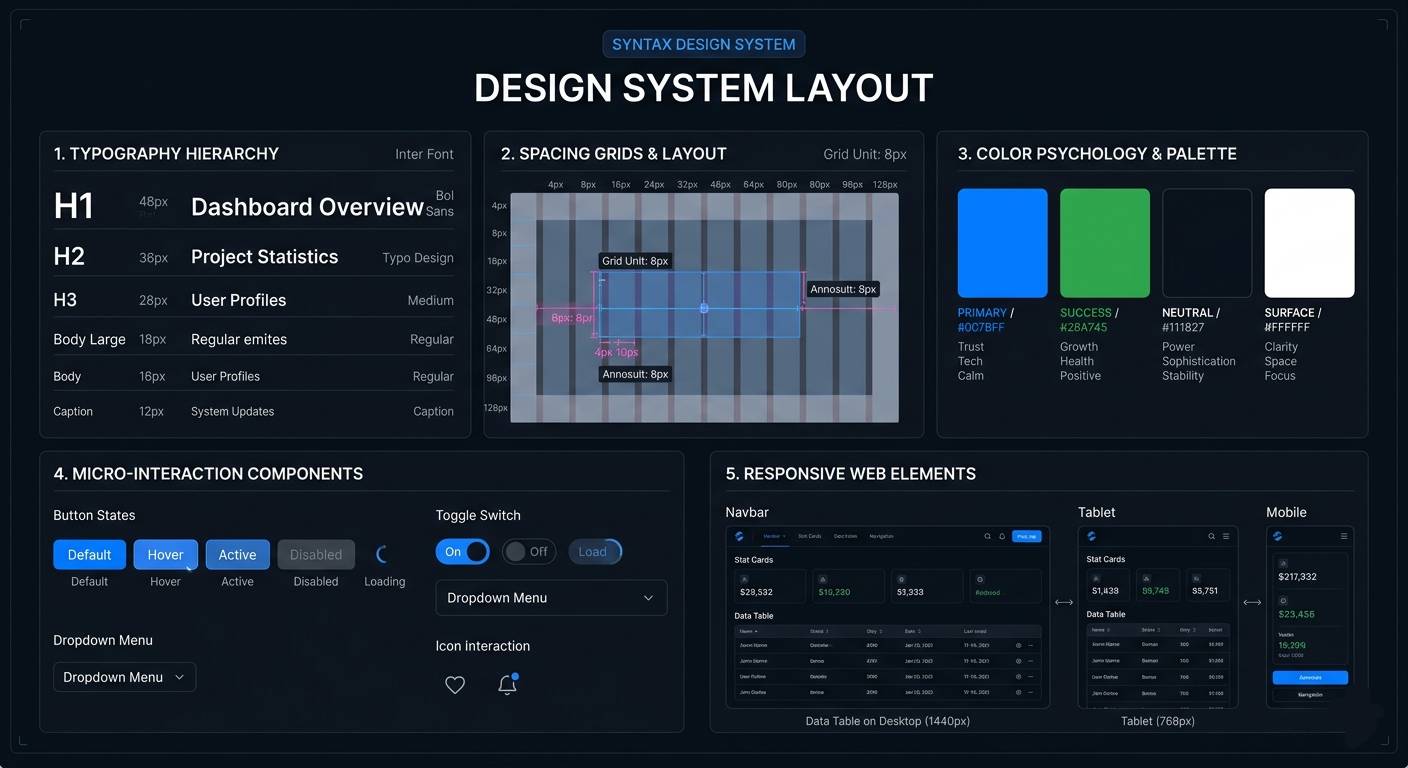
In 2026, users interpret motion design as a signal of product quality.
Micro-interactions now serve as:
- Confirmation of system responsiveness
- Emotional feedback for user actions
- Indicators of product polish and care
But expectations have changed:
- Subtle motion = intelligent and reliable
- Excessive animation = distracting or manipulative
- Delayed response = system instability
Good motion design now feels invisible—but reassuring.
Transparency, Privacy, and Visual Assurance
Trust is now deeply tied to data awareness and AI transparency.
Users expect clear signals such as:
- Visible privacy controls and data usage explanations
- Clear disclosure of AI-generated or AI-assisted content
- Security indicators that are understandable, not hidden
- Honest UX that avoids persuasive manipulation patterns
In 2026, transparency is not a feature—it is a requirement for credibility.
Measuring Trust Through Behavioral Signals
Trust is no longer subjective—it is measurable through real user behavior.
Modern evaluation methods include:
- Behavioral heatmaps to detect hesitation points
- Trust-based A/B testing (confidence vs. conversion)
- Emotional UX feedback using sentiment analysis tools
- AI-assisted usability simulations
Design is now continuously refined based on how safe users feel, not just how they behave.
Conclusion: Trust Is the New Design Currency
In 2026, digital success is no longer defined by aesthetics or functionality alone—it is defined by perceived trustworthiness.
Every design decision—spacing, typography, color, motion, and imagery—contributes to one central question in the user’s mind:
“Do I believe this?”
When design aligns clarity with authenticity and technology with human intent, users don’t just interact.
They trust.